Olive Eggers
First Generation
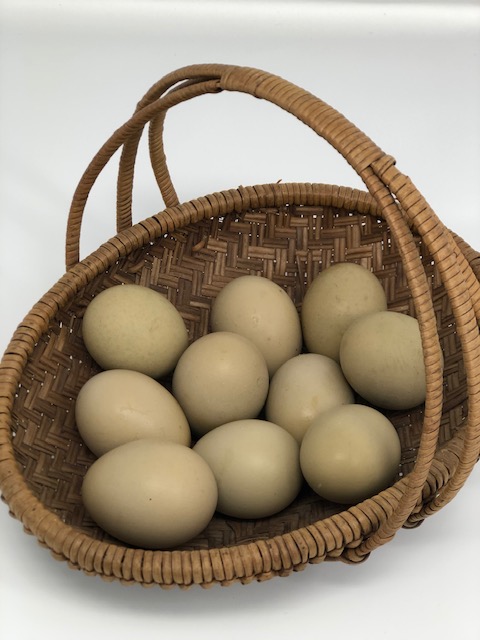
Looking for that extra “pop” in your egg basket? We have two stunning lines of olive eggers that produce an olive egg a different shade of our Sage and Moss eggers. The combining all three breeds within a flock will bring a rich range of green into your daily egg collection.
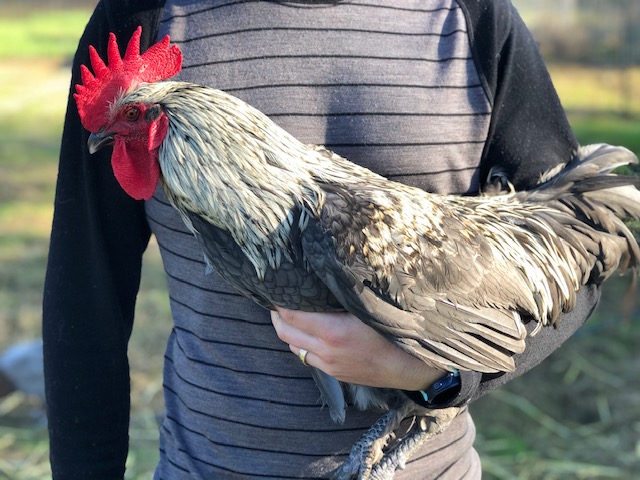
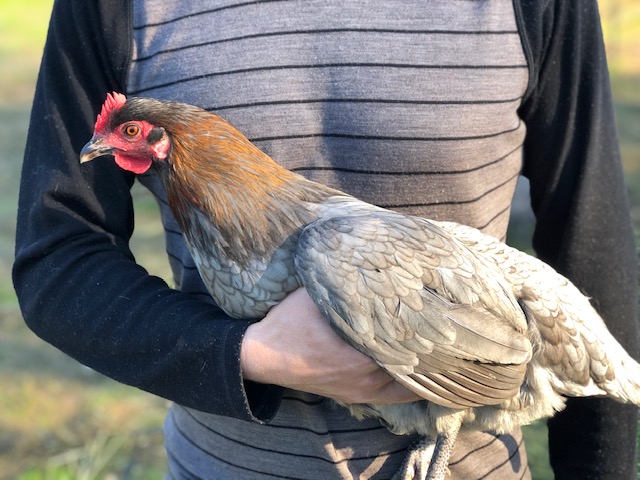
Our first generation Olive eggers lean heavy on the Marans side of their genetics. Their body frame and feathering resembles the marans while their face holds the whisper of their Isbar influence. They come in both black and blue feather types and are laid back, large sweet girls and boys.
Quick Breed Stats
Egg Color: Green
Cosmetic Egg Bloom: Can sometimes have a bloom making the eggs look a totally different shade of silver. Every egg laid has its natural protective bloom
Egg Size: Larger than standard
Egg Texture: Shiny and smooth.
Egg Production During Spring and Summer: high roughly 5-6 eggs a week.
Meat Production: duel purpose, both males and female have some meat on them.
Heat Tolerance: moderate, these are slightly larger birds that need shelter from extreme heat
Cold Tolerance: very high
Disposition: sweet, communicative, laid back, curious.
Weeks to Maturity: 22
Free Range Ability: high, males are always on the lookout for predators. Females run to shelter if the rooster sounds the predator alarm.
Likelihood They Will Want To Hatch Eggs: moderate
Pricing for First Generation Olive Egger:
Guaranteed Female Chick $35 each
Olive Eggers
Bred at Alchemist Farm since 2015 — for the deepest, most consistent olive-green eggs you can put in a basket.
Our Olive Eggers are one of the most-requested breeds we offer — and the breed our customers most often come back for. They lay beautiful olive-green eggs that range from deep moss to softer khaki, they have the calm, sweet disposition of the Marans side of their lineage, and they’re hardy enough to forgive almost any beginner mistake. We breed two distinct generations of olive eggers (F1 and F2) so you can choose between guaranteed-consistent color and the chance at the deepest possible olive.
If you want the full story — egg color genetics, parent breeds, how to vet a hatchery, side-by-side comparisons — read our complete Olive Egger guide. Everything below is what you need to know to choose and order from us.
| 2026 Orders are open: |
Quick Breed Stats
| Trait | What to expect |
| Egg color | Olive green (range: deep moss to khaki) |
| Cosmetic egg bloom | Occasional silvery bloom that can make the egg look pewter until washed |
| Egg size | slightly larger than standard |
| Eggs per week (peak) | 5-6 |
| Eggs per year (mature hen) | 200-250 |
| Egg texture | Shiny and smooth |
| Time to point of lay | 22 weeks |
| Adult hen weight | 6-7 lbs |
| Disposition | Sweet, communicative, laid back, curious |
| Cold tolerance | Very high |
| Heat tolerance | Moderate — provide shade in extreme heat |
| Free-range ability | High — roosters watchful, hens responsive to alarm |
| Predator awareness | Very high |
| Dual-purpose viability | Yes — both males and females carry meat |
| Broodiness | Moderate — some hens will set |
| Beginner friendly? | Yes — one of the easiest rare breeds we offer |
F1 vs. F2 — Choose Your Generation
We breed both first-generation and second-generation olive eggers. They’re sold as separate products because they produce noticeably different eggs.
First Generation Olive Egger (F1)
Direct child of a brown-egg parent (Marans) and a blue-egg parent (Ameraucana or Isbar). F1 hens are the most predictable green-egg layers in the cross. Our F1 olive eggers lean heavily on the Marans side — larger frame, calm temperament, and the deeper olive shade we’ve been selecting for since 2015. If you want a guaranteed beautiful green every time, F1 is the right choice.
Second Generation Olive Egger (F2)
Result of crossing two F1 olive eggers. F2 hens can produce the deepest possible olive — but the trade-off is more variation across the flock. Some F2 hens lay an extraordinary near-black green; others lay a lighter khaki; a small percentage may revert toward plain brown. If you want a chance at trophy-dark eggs and you’re okay with that range, F2 is the right choice.
| Not sure which to pick?
Most first-time buyers want F1. Pick F2 only if you specifically want the chance at the deepest possible olive and you understand that color will vary across the flock. We label each product separately on our shop page so there’s no confusion. |
Pricing
| Product | Price | Notes |
| Olive Egger 1st Generation, Female Chick | $35 | Sexed female |
| Olive Egger 1st Generation, male chick | $1 | male |
| Olive Egger Fertile Hatching Eggs (individual) | see product | Seasonal availability |
Shipping is a flat $60, always overnight USPS Express. Seasonal minimums: 10 chicks per box March-May and October, 6 chicks per box June-September. Local pickup at our farm is free with no minimum, though we recommend at least two chicks so no chick is brooded alone.
What Makes Our Olive Eggers Different
There are dozens of hatcheries that sell something they call “olive egger.” Most don’t deserve the name. Here’s what eleven years of careful breeding has produced at Alchemist Farm:
- Selectively bred since 2015. We’ve been refining our olive egger lines for over a decade — selecting parent stock for color depth, calm temperament, and Marans-side body type.
- Defined cross. Our F1s are Marans × Ameraucana / Isbar. We can tell you exactly which parent breeds produced your chick. Many hatcheries can’t or won’t.
- Both generations labeled clearly. F1 and F2 are sold as separate products with different SKUs and different price points. You always know which you’re buying.
- No male chicks are killed. Every chick born here is valued — males included. Read more about
- our humane practices.
- 100% solar-powered hatchery. Brooders, incubation rooms, and grow-out spaces all run on solar.
- Plastic-free shipping. Every chick box is plastic-free, with compostable bedding and gel hydration for the journey.
- Family-owned, small-batch. Franchesca and Ryan Duval and their two children run the farm in Sebastopol, Northern California.
Pair Your Olive Eggers With
Olive Eggers are at their best in a mixed-color flock. Here are the breeds our customers most often add alongside them for a true rainbow egg basket:
- Sage Eggers — softer seafoam green that complements the deeper olive.
- Moss Eggers — a third distinct shade of green to round out your green basket.
- French Black Copper Marans — dark chocolate eggs for striking contrast.
- Alchemist Blue Chickens — proprietary blue-egg layer, female-guaranteed at hatch.
- Azure Eggers — pale powder-blue eggs, female-guaranteed at hatch.
- Heritage Welsummers — terra cotta brown with speckles.
See the full Breeds for Egg Color collection for the complete egg-color spectrum.
Care Basics
Olive Eggers are one of the easiest rare breeds we offer. The short version:
- Space: 3-4 sq ft of coop per hen, 10+ sq ft of run per hen.
- Feed: 20% protein chick crumble through 18 weeks, then 16-17% layer feed.
- Our favorite feeds and discount codes.
- Climate: Excellent in cold. Provide deep shade and water in extreme heat.
- First six weeks: Follow our
- New Chicken Keepers guide for brooder setup, heat, bedding, and triage.
- Free-ranging: Very capable. The roosters in our breeding flock are notably attentive predator-watchers.
Common Questions
For the full, in-depth answers to these and more — see our complete Olive Egger guide.
Will my olive egger always lay the same shade of green?
No. Egg color naturally varies slightly across a hen’s laying cycle and across hens within the same generation. F1 hens are the most consistent. The bloom on each egg can also make the color appear different until the egg is washed.
What’s the difference between an olive egger and an Easter egger?
Olive eggers are bred specifically for olive-green eggs from a defined cross of brown and blue egg parents. Easter eggers are any chicken carrying one copy of the blue-egg gene with no defined cross — they may lay blue, green, pink, or cream depending on the individual hen.
When do olive eggers start laying?
Typically 20-24 weeks of age. Our heritage-style olive eggers tend toward the later end of that range and grow into stronger, longer-living layers.
Are olive eggers cold-hardy?
Yes — their Marans-heavy build handles freezing temperatures well with a dry, draft-free coop and unfrozen water.
Can I order just one olive egger chick?
For local pickup, yes — though we strongly recommend at least two chicks so neither is brooded alone. Shipped orders require the seasonal minimum (10 chicks March-May and October, 6 chicks June-September) to keep chicks safe in transit.
| Ready to bring olive eggers home?
Add Olive Eggers to your cart → · Read the complete Olive Egger guide · See the Chick Calendar |