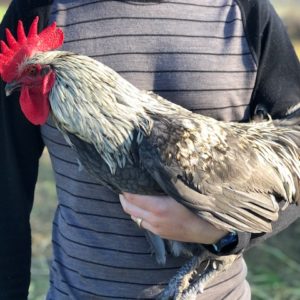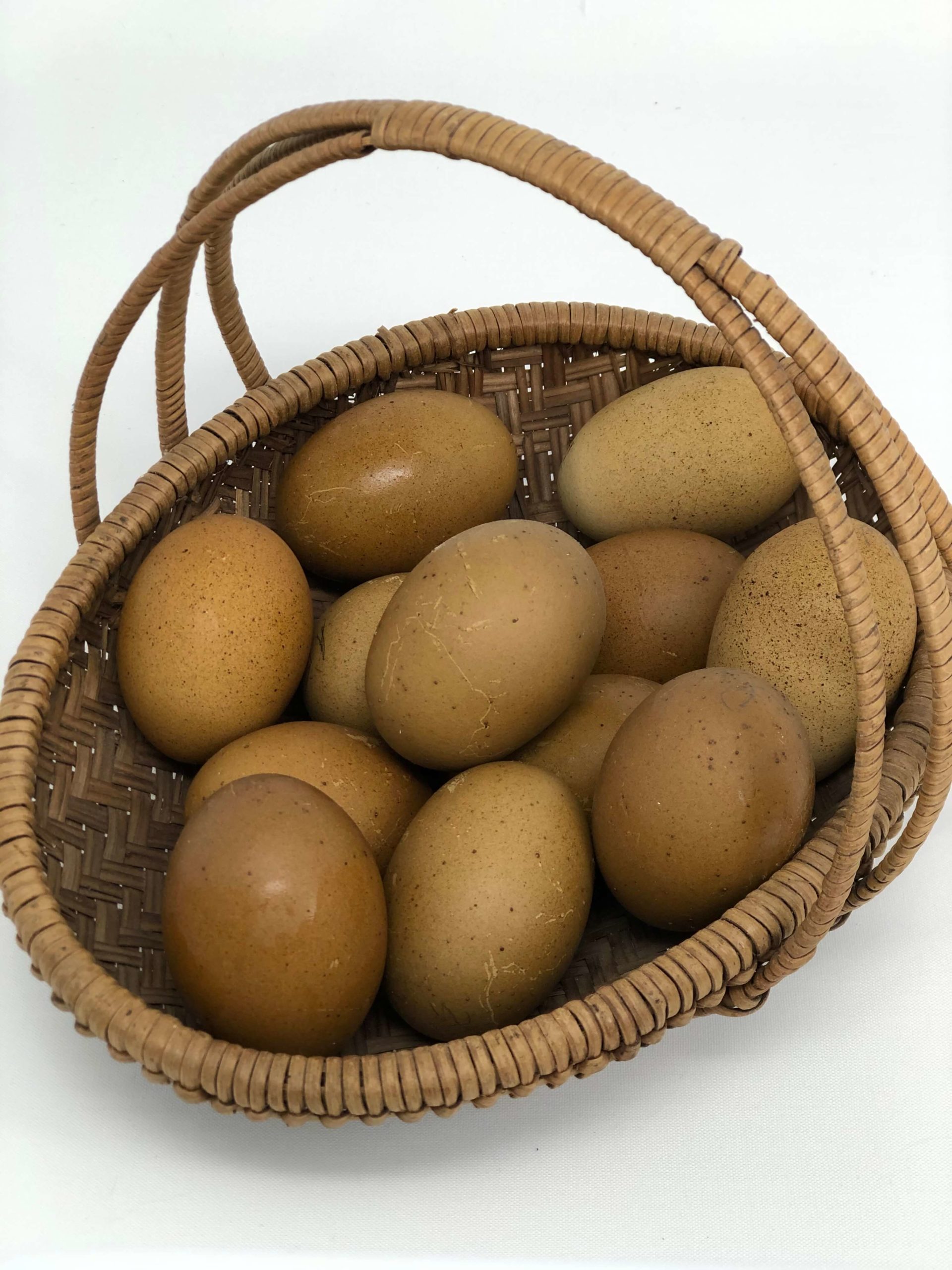
Alchemist Farm Olive Egger Chickens: The Complete Buyer’s Guide
If you’ve been searching for an olive egger chicken, the breed that lays those gorgeous olive-green
eggs every chicken keeper seems to want, you’ve probably noticed something strange: every hatchery
describes them a little differently. Some sell “olive eggers” that lay khaki. Some sell birds that don’t even
hatch a green egg until the second generation. Some skip the genetics conversation entirely.
That’s because olive egger isn’t a recognized breed. Its a cross, and like every cross, the result
depends entirely on the breeder. After more than a decade of hatching olive eggers at Alchemist Farm,
we’ve watched the term get stretched, marketed, and occasionally mangled. This guide is our attempt to
give you a single resource that covers what an olive egger really is, what to expect in your egg basket,
how to care for one, and how to make sure the chicks you order are the real thing.
In this article:
• What is an olive egger chicken?
• What color eggs do olive eggers actually lay?
• 1st generation vs. 2nd generation olive eggers (the genetics, simplified)
• Temperament, hardiness, and egg production
• How to tell a real olive egger from a marketing label
• Olive Egger vs. Easter Egger vs. Sage Egger — a side-by-side
• Care and brooder setup
• Where to buy ethically raised olive egger chicks
• Frequently asked questions
What is an Olive Egger Chicken?
An olive egger is a hybrid chicken bred specifically to lay olive-green eggs. To create one, you cross a
brown-egg-laying breed (typically a Marans or Welsummer) with a blue-egg-laying breed (typically an
Azure egger, Isbar.
The genetics are surprisingly simple. The blue pigment in a chicken egg is laid down at the very start of
the egg’s formation, all the way through the shell. The brown pigment is laid down at the end, like a coat
of paint over the outside. When you combine a hen that produces blue interior pigment with a rooster
carrying brown-pigment genetics, the offspring’s eggs come out blue on the inside and brown on the
outside — and the human eye reads that combination as olive green.
Because the cross can be made many different ways, no two olive egger flocks are identical. At
Alchemist Farm, our olive eggers lean heavily on the Marans side — which gives them the larger frame,
the calm temperament, and the deeper olive shade that we’ve been selecting for since 2015.
What Color Eggs Do Olive Eggers Actually Lay?
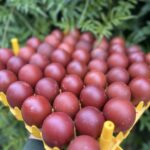
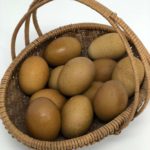
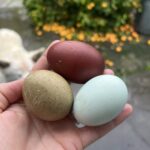
The answer is: it varies. 🙂 An olive egger hen lays eggs in a range that can shift from a deep
moss green to a softer khaki, depending on:
• The parent breeds used in the cross. Marans × Ameraucana tends to produce deeper olives.
Welsummer × Legbar tends toward a brighter green.
• Generation. First-generation (F1) olive eggers usually lay the most consistent green. Second and
third generations can drift toward either parent color.
• The individual hen. Even sisters from the same hatch can lay slightly different shades. This is
normal.
• The egg’s bloom. The bloom is a natural protective coating laid on the outside of every egg as
it’s laid. On olive eggs, the bloom often appears as a silvery or dusty finish that makes the egg
look like a totally different color until you wash it.
• Where she is in her laying cycle. Most hens lay slightly lighter eggs toward the end of a long
laying stretch, then return to a deeper color after a rest.
If you want guaranteed deep-olive eggs every time, no hatchery in the world can promise it. What we
can promise is that our olive eggers come from breeding stock selected over multiple generations for
color depth and consistency.
1st Generation vs. 2nd Generation Olive Eggers
This is the part most hatcheries don’t explain well, and it’s the single biggest reason buyers feel
disappointed by olive eggers they bought elsewhere. The generation matters.
First-Generation Olive Eggers (F1)
A first-generation olive egger is the direct child of a brown-egg parent and a blue-egg parent — usually a
Marans hen mated to an Ameraucana rooster, or the reverse. Because each parent contributes exactly
one copy of the relevant genetics, F1 hens are the most reliable green-egg layers in the cross. At
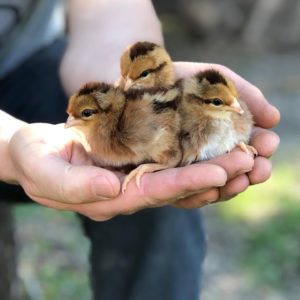
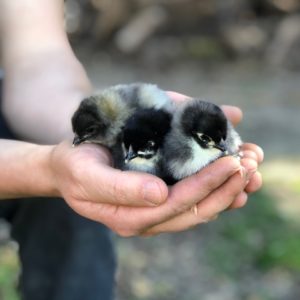
Alchemist Farm, our F1 olive eggers carry a heavy Marans body type with subtle Isbar facial features —
they’re large, calm, sweet, and beautiful.
Second-Generation Olive Eggers (F2)
A second-generation olive egger is the result of crossing two F1 olive eggers together, or back-crossing
an F1 to one of the parent breeds. F2 hens often lay a darker olive than F1s — which sounds great until
you realize that some of the F2 chicks will inherit the recessive copy of the blue-egg gene from both
parents, and others will inherit none. The result is a flock where some hens lay deep olive, some lay
khaki, and a few lay plain brown. If a hatchery advertises “F2 olive eggers” without explaining this, ask
questions.
Quick rule of thumb
If you want predictability, buy F1. If you want a chance at the deepest possible olive — and you're
okay with some variation across your flock — F2 is the answer. We breed and clearly label both at
Alchemist Farm so you know exactly what you’re getting.
Olive Egger Quick Stats
Trait What to expect
Egg color Olive green (range: deep moss to khaki, occasional silver bloom)
Egg size Larger than standard
Eggs per week (spring/summer peak)5–6
Eggs per year (mature hen) 200–250
Time to maturity ~22 weeks
Adult hen weight 6–7 lbs
Cold tolerance Very high
Heat tolerance Moderate (provide shade and shallow water in extreme heat)
Temperament Sweet, curious, communicative, laid back
Free-range ability High — alert flockmates, responsive roosters
Broodiness Moderate — some hens will try to hatch eggs
Predator awareness Very high — see our Predator Aware Breeds collection
Beginner friendly? Yes — one of the easiest rare breeds to keep
Temperament, Care, and What to Expect in Your Backyard
Of all the rare breeds we keep at Alchemist Farm, olive eggers are among the easiest to recommend to
first-time chicken keepers. They’re large enough to handle confidently, calm enough to win over nervous
children, and hardy enough to forgive most beginner mistakes. Here’s what you can expect:
Disposition
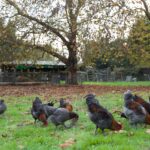
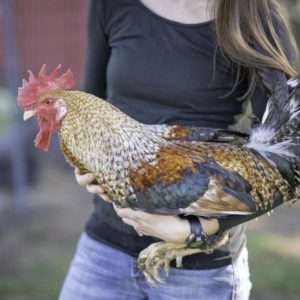
Our olive egger hens follow people around, talk to you while you garden, and tolerate handling once
they’re used to it. The roosters — and we keep ours rather than culling them, like every male chick born
here — are watchful but not aggressive. They sound the alarm when a hawk passes overhead, and the
hens dive for shelter the moment they hear it.
Space and housing
Plan on 3-4 square feet of coop space and 10+ square feet of run space per olive egger. They’re larger
than average laying hens and don’t love being crowded. They do well in cold climates — their Marans-
heavy build handles freezing temperatures without trouble — but in regions with prolonged 95°F+ heat,
provide deep shade, shallow water for foot-cooling, and resist the urge to over-feed scratch grains.
Feed
Standard 20% protein chick crumble through 18 weeks, then transition to a 16-17% protein layer feed.
We’ve had excellent results with Scratch and Peck Feeds and you can use our discount code Alchemist15 for 15% off.
Olive eggers respond particularly well to gut-health supplements like the Better Flock probiotic line — gut health drives both feather quality and egg-color consistency.
Brooder basics for olive egger chicks
If you’re new to brooding, our full New Chicken Keepers guide covers heat, bedding, and the first six
weeks in detail. The short version: 100-105°F directly under the heat source for the first few days, large
pine shavings (never cedar — toxic), 98°F drinking water on day one, and never let the chicks run out of
water. Olive egger chicks are notably hardy travelers, but the first 48 hours after arrival are still when
most loss happens — so be home, be calm, and follow the protocol.
How to Tell a Real Olive Egger From a Marketing Label
Because “olive egger” isn’t a standardized breed, anyone can use the name. Here’s how to vet a
hatchery before you spend $20-35 on a chick that may not lay what you’re hoping for:
• Ask which breeds are in the cross. A real olive egger breeder will rattle off the answer —
Marans × Ameraucana, or Welsummer × Cream Legbar, etc. If the hatchery is vague (“various
brown and blue egg breeds”), be cautious.
• Ask which generation you’re buying. F1 means more consistent color. F2 means a wider color
range. A serious breeder will tell you which they offer and label them separately.
• Ask to see photos of the parent flock — and the eggs. Reputable hatcheries post photos of
their breeding birds and a representative egg sample. Stock images of someone else’s eggs are a
red flag.
• Ask how they handle male chicks. At industrial hatcheries, male chicks are killed within 24
hours of hatching. At ours hatchery when have never and will never kill a male chick upon hatch, every chick is valued. This isn’t a small thing.
• Ask about shipping practices. Olive egger chicks ship beautifully when packed with care —
overnight USPS Express, gel hydration, climate-monitored timing. Hatcheries that ship in volume
often lose chicks in transit. Smaller batches survive better.
Olive Egger vs. Easter Egger vs. Sage Egger
These three breed names get confused constantly. Here’s the difference in one table:
| Olive Egger | Easter Egger | Sage Egger | |
| Egg color | Deep olive to khaki green | Blue, green, pink, cream — varies per hen | Soft seafoam / sage green (lighter than olive) |
| Parent breeds | Brown-egg breed (Marans, Welsummer) × Blue-egg breed (Ameraucana, Legbar) | Any chicken carrying one copy of the blue-egg gene; not standardized | Alchemist Farm proprietary cross — see Sage Egger breed page |
| Color consistency | Consistent within a generation | Highly variable — different hens, different colors | Very consistent — bred specifically for shade stability |
| Size | Larger than standard | Medium | Standard |
| Temperament | Calm, sweet, laid back | Variable | Friendly, curious |
| Best for | Beginners who want guaranteed green eggs | Buyers who love surprise variety | Buyers who want soft-green eggs that pair with darker olives |
If you want a rainbow egg basket, the pro move is all three. Olive Eggers + Sage Eggers + Moss Eggers in one
flock will give you three distinct shades of green that look stunning together. We sell all three lines —
see our Breeds for Egg Color collection.
Olive Egger Pricing and What to Expect
At Alchemist Farm, our olive egger pricing for the 2026 season is:
• Individual straight-run chick (1st generation): $20
• Individual female chick (1st generation): $35
Shipping is a flat $60 for up to 20, always overnight USPS Express. Seasonal minimums apply: 10
chicks per box March-May and October, 6 chicks per box June-September. Local pickup at our farm in
Sebastopol, CA is free, and there’s no minimum on pickup orders. We do recommend at least two chicks
so you don’t have a lonely solo bird.
Ready to add olive eggers to your flock?
Our 2026 chick season opens February 17 for local pickup and March 24 for shipping. Pre-orders fill
quickly. See current Olive Egger availability
Why Buy Olive Egger Chicks from Alchemist Farm?
There are dozens of places to buy olive eggers online. Here’s what makes our hatchery different:
• No male chicks are killed. Every chick that hatches on our farm is valued — males included. This
is rare in the hatchery industry, and it’s the practice we’re proudest of.
• 100% solar-powered. Our hatchery, brooders, and incubation rooms all run on solar energy.
• Plastic-free shipping. Every chick box is plastic-free, compostable where possible, and includes
gel hydration and warm bedding for the journey.
• Selectively bred since 2015. Our olive egger lines have been refined over a decade for color
depth, temperament, and hardiness.
• Family-owned, small-batch. Franchesca and Ryan Duval run the farm in Sebastopol, Northern
California, with their two kids. You’re talking to the people who raised your chicks.
Are olive egger chickens good for beginners?
Yes. Olive eggers — especially first-generation hens from a reputable breeder — are calm, hardy, and
forgiving of beginner mistakes. They’re one of the easiest rare breeds to keep.
How many eggs do olive eggers lay per week?
Healthy mature hens lay 5-6 eggs per week during their peak spring and summer laying period, and 3-4
per week in cooler months. Total annual production averages 200-250 eggs.
Will my olive egger always lay deep green eggs?
Not always. Egg color naturally lightens slightly toward the end of a long laying stretch and deepens
again after a molt or rest. The bloom on each egg can also make the color appear different until the egg
is washed.
What’s the difference between an olive egger and an Easter egger?
Olive eggers are bred specifically to lay olive-green eggs from a defined cross of brown and blue egg
parents. Easter eggers are any chicken carrying one copy of the blue-egg gene, with no defined cross —
so they may lay blue, green, pink, cream, or anything in between.
When do olive eggers start laying?
Most olive egger hens begin laying between 20 and 24 weeks of age, with 22 weeks being typical.
Heritage breeds like ours tend toward the longer end of that range — they grow into stronger, longer-
living layers.
Are olive egger roosters loud?
Less so than many breeds. Our olive egger roosters tend toward a deeper, less frequent crow than
smaller breeds. They are still roosters, however — check your local ordinances before keeping one.
Can olive eggers handle cold winters?
Yes. Their Marans-heavy build gives them excellent cold tolerance. They handle freezing temperatures
well as long as they have a dry, draft-free coop and access to unfrozen water.
How long do olive eggers live?
With good care, olive eggers typically live 6-8 years, with the strongest layers in years 2-4 and gradually
declining production thereafter.
We ship nationwide — including Alaska, Hawaii, and Puerto Rico — via overnight USPS Express. Seasonal
minimums apply (10 chicks March-May and October, 6 chicks June-September) to protect chicks during
travel.
If you’ve been looking for a humane place to buy olive egger chicks, a family-run hatchery that
treats every chick like it matters, we’d be honored to be that place for you. Browse our 2026
olive egger availability and Or see all of our colorful egg-laying breeds.