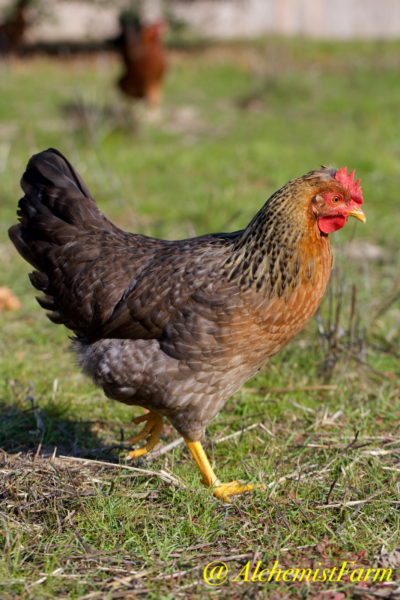
 Our Sage Eggers are one of our most versatile groups we work with on the farm. New in 2026 these birds will be offered sexed so you can select the guaranteed female option
They are one of our signature breeds that we brought to market in 2015 and they will continue to offer them for years to come because they are fantastic layers.
We love our sage eggers for the lovely combination of sage green colored eggs and speckling patterns they can produce. True workhorses of the flock, they produce 6-7 eggs a week in spring and continue to lay strong through the summer and fall. Predator wise and intelligent, these birds know their way around the barnyard and are excellent foragers.
These beauties lay sage colored eggs that have anything from gentle white speckling over top to dramatic brown spots – every hen is unique in her laying pattern and will continue to lay in that pattern throughout her life.
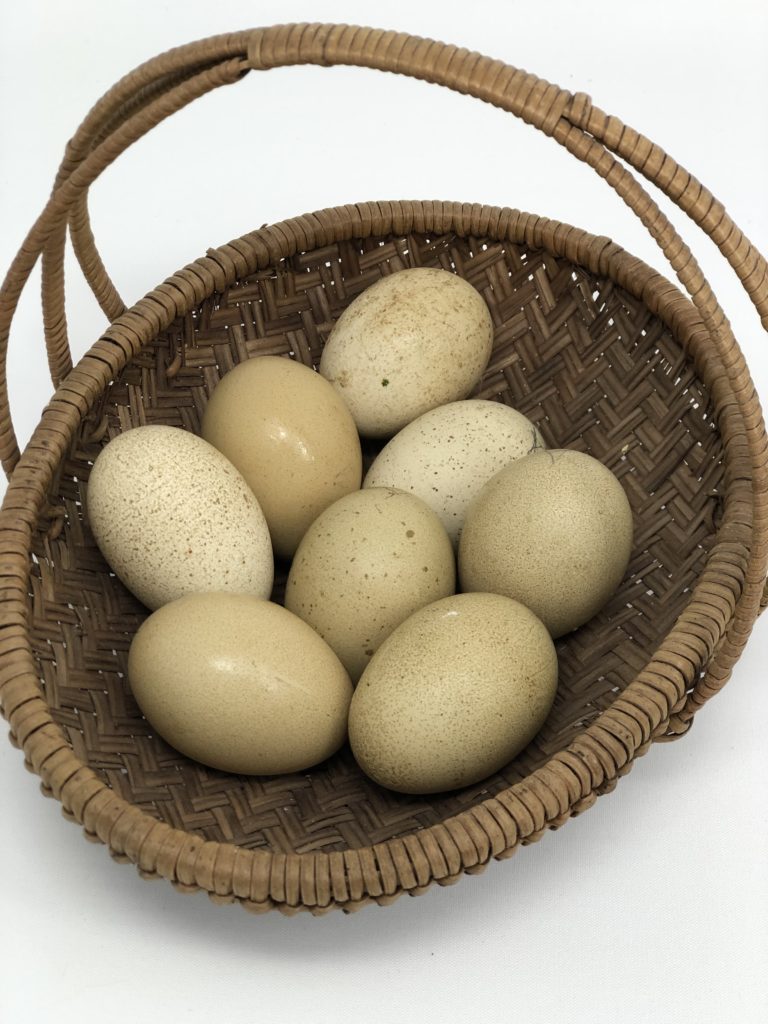
Our sage eggers will produce an egg that is a lighter shade than a typical olive egger, their eggs will help you expand the rainbow in your daily egg collecting basket. Sage eggers are a breed unique to Alchemist Farm and they are the strongest layer we offer.
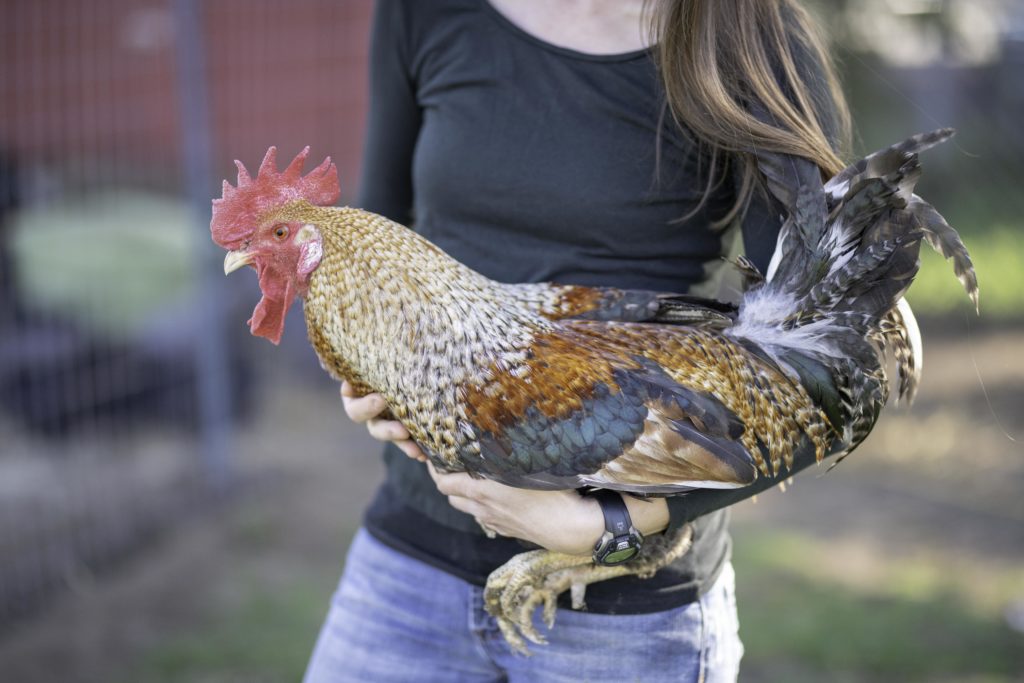
The roosters are stunning and cause everyone to stop and ask what breed they are. Hens have lovely sweet personalities and they are extremely predator wise. Sage eggers are a medium framed bird that will produce a regular sized egg. Our sage eggers look similar to our azure eggers in feathering. How you will know you have a Sage Egger hen is by the rusty red undertones in the breast feathers. Azure eggers will have a lighter colored chest and of course will be laying blueish eggs while our sage eggers will be laying greens.
Quick Breed Stats
Egg Color: lighter green with speckles
Cosmetic Egg Bloom: Can have reverse speckles on occasion that look white. Every egg laid has its natural protective bloom.
Egg Size: standard
Egg Texture: matted
Egg Production During Spring and Summer: very high 6 eggs a week
Meat Production: best for egg production, males have some meat on them.
Heat Tolerance: very good if shade is provided
Cold Tolerance: very good if free from drafts. Use vaseline to prevent frostbite in winter
Disposition: laid back and more solitary. Will come running for treats.
Weeks to Maturity: 22
Free Range Ability: very high, very predator wise – roosters are excellent protectors of the hens.
Likelihood They Will Want To Hatch Eggs: low
Pricing:
Male Chick $1
Our signature soft-green speckled egg layer. Now available as guaranteed females.
Sage Eggers are one of our signature breeds, we brought them to market in 2015, and a decade later they’re still the strongest layer we offer. They lay a soft seafoam-to-sage green egg with delicate speckling that’s unique to each hen for her entire life, like a fingerprint.
New for 2026: Sage Eggers are now available as guaranteed females. After ten years of breeding, we’ve reached the point where we can reliably sex them at hatch — opening this previously straight-run-only breed to keepers who can’t or won’t raise roosters.
Quick Breed Stats
| Trait | What to expect |
| Egg color | Soft seafoam to sage green, with speckling unique to each hen |
| Egg size | Standard |
| Egg texture | Matte |
| Eggs per week (peak) | 6 — the strongest layer in our flock |
| Time to point of lay | 22 weeks |
| Cold tolerance | Very high |
| Heat tolerance | Very good with shade |
| Disposition | Laid back, more solitary forager than lap chicken |
| Free-range ability | Very high — notably predator-wise |
| Broodiness | Low |
| Special feature | Each hen’s speckle pattern is unique for life |
| Sexing (new 2026) | Guaranteed female option available |
What Makes Our Sage Eggers Different
- Brought to market by us in 2015 — one of our two signature breeds (the other being Olive Eggers).
- The strongest layer in our entire flock: 6 eggs a week at peak.
- Unique speckling pattern per hen — no two Sage Egger eggs look identical.
- NEW FOR 2026: guaranteed female option, alongside the traditional straight run.
- Visually distinct from Azure Eggers (which share genetics): Sage Eggers show rusty-red undertones in the breast feathers.
Care Basics
- Standard care: 3-4 sq ft coop / 10+ sq ft run per hen.
- Excellent foragers — give them green access if possible.
- Their high production means high calcium needs. Always offer free-choice oyster shell.
- Standard 20% chick starter through 18 weeks, then 16-17% layer feed.
Pricing
| Product | Price | Notes |
| Sage Egger female chick (NEW for 2026) | $30 | Guaranteed female at hatch |
| Sage Egger straight-run chick | see product page | 50/50 male/female |
| Sage Egger male chick | $1 | Males kept and valued at our farm |
Shipping is a flat $60 for up to 20 chicks, $90 for 20-40 chicks and $150 for 40-80 chicks. Seasonal minimums: 10 chicks March-May and October, 6 chicks June-September. Local farm pickup is free with no minimum (we recommend at least two chicks so none is brooded alone).
Pair Your Sage Eggers With
- Olive Eggers — for deeper olive alongside the lighter sage
- Moss Eggers — for a third distinct shade of green
- Azure Eggers — for true blue from the same selective program
- French Black Copper Marans — for chocolate-brown contrast
Common Questions
What’s the difference between a Sage Egger and an Olive Egger?
Olive Eggers lay a deeper olive green. Sage Eggers lay a lighter, softer seafoam green. Both come from the same general genetic philosophy at our farm, but they’re distinct breeds. Many of our customers keep both for the basket contrast.
Are Sage Eggers really sexable now?
Yes — new for 2026. After a decade of selective breeding, our line has stabilized enough that we can reliably sex chicks at hatch. The guaranteed female option is the biggest change to this breed since we launched it.
What makes Sage Egger eggs unique?
The combination of light green color and per-hen speckling. Each hen’s pattern stays consistent across her lifetime, so once you can recognize an individual hen’s egg, you’ll always be able to.
How are Sage Eggers different from Azure Eggers?
They share genetics — Sage Eggers are part of the Azure Egger parent stock. Visually, Sage Egger chicks and adults show rusty-red breast undertones. Sage Eggers lay green; Azure Eggers lay true blue.
| Ready to bring Sage Eggers home? |