French Black Copper Marans: The Complete Guide to Chocolate Egg Layers (2026)
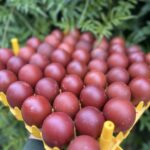
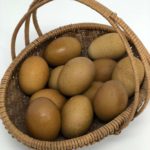
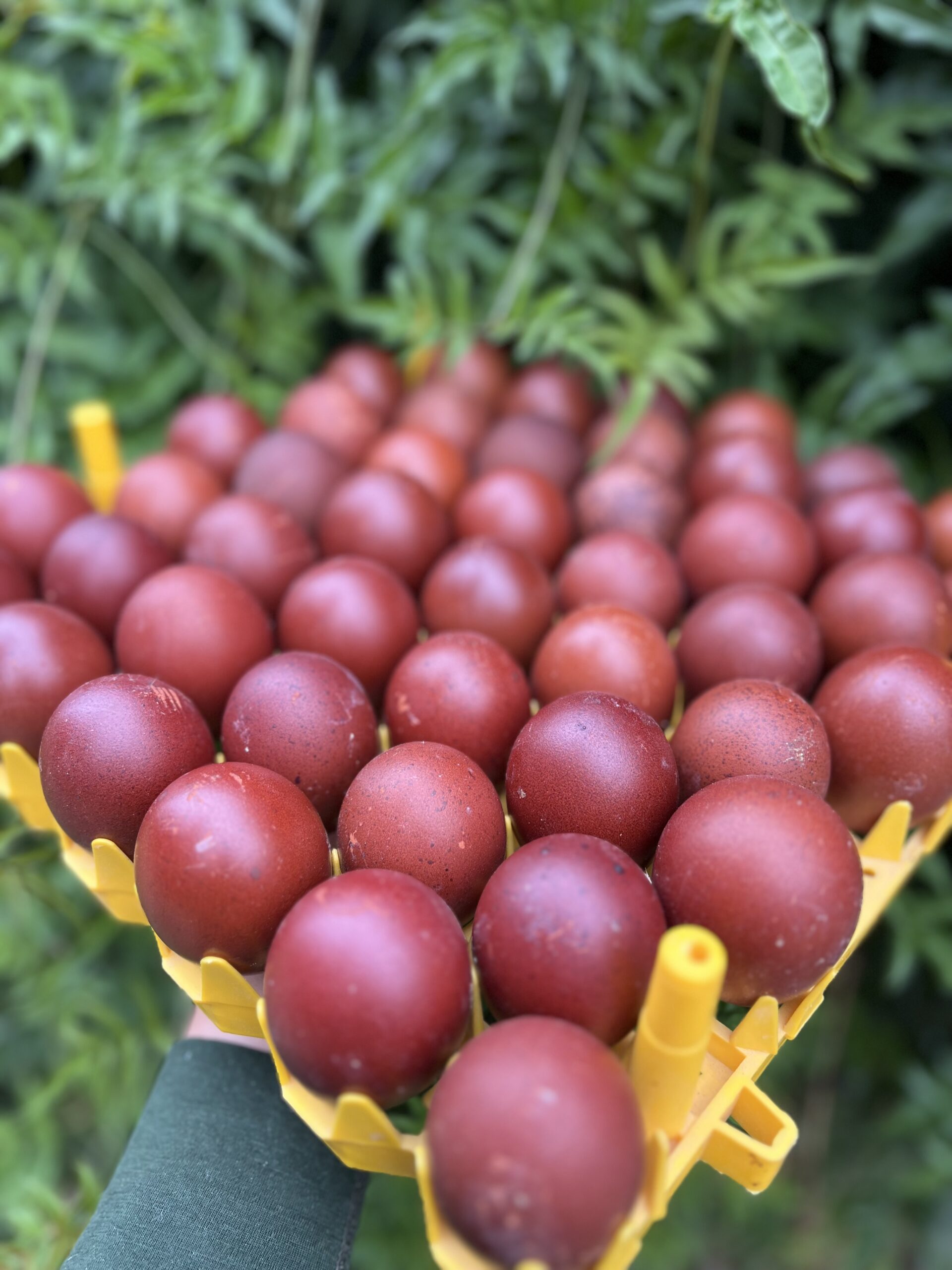
There is a moment, when you crack open your first egg from a French Black Copper Marans hen, that’s hard to forget. The shell is the color of dark cocoa. The yolk that drops into the pan is bright orange — not the pale lemon of a supermarket egg, but a deep, almost-amber dome that holds its shape. You stand there for a second and think: this is what an egg used to look like.
French Black Copper Marans — the breed behind the world’s darkest chocolate-brown eggs — are a chicken keeper’s prize bird. They’re also one of the most misunderstood breeds in the United States. After ten years of carefully refining our Marans line at Alchemist Farm, we’ve watched buyers get sold “Marans” that turn out to be light-brown layers, “French” birds that aren’t actually feather-shanked, and “black copper” birds with no copper at all. This guide is everything we’ve learned about the breed, the egg color chart that defines them, the bloodlines that matter, and how to make sure the chicks you order are the real thing.
In this guide:
- What is a French Black Copper Marans?
- The famous Marans egg color chart (and what “a 6” actually means)
- French vs. American Marans — and why bloodline matters
- What makes the Alchemist Line different
- Quick stats: production, temperament, hardiness
- Care, climate, and the secret to keeping eggs dark
- Marans vs. Welsummer vs. Olive Egger — the brown-egg comparison
- Pricing, shipping, and what to expect from a Marans chick
- Frequently asked questions
What Is a French Black Copper Marans?
A French Black Copper Marans is a heritage chicken breed developed in the town of Marans, on the western coast of France, in the late 19th and early 20th centuries. The breed was prized from the beginning for two things: rich-flavored meat, and dark brown eggs unlike anything other breeds produced. By the 1920s, the Marans had become one of France’s most highly regarded heritage breeds, and it was eventually exported to England, the United States, and beyond.
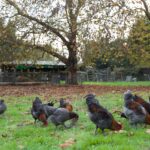
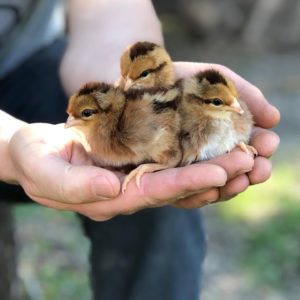
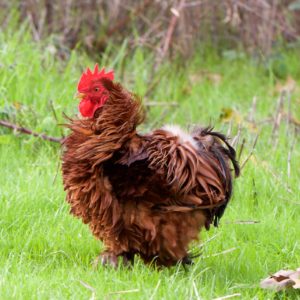
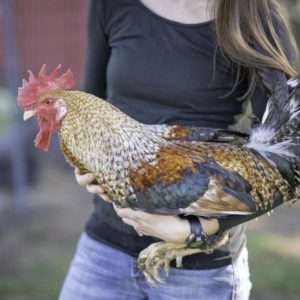
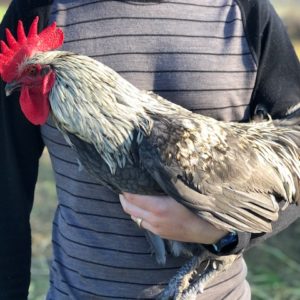
“Black Copper” refers to the bird’s plumage: a dramatic black body with copper-orange feathers cascading down the neck and across the saddle of the rooster. The hens carry a more muted version of the same pattern — black with a copper-tinted hackle. The French part of the name refers to the breed’s defining physical feature: feathered shanks. Genuine French Marans have soft feathers running down the outside of their legs and across the outer toes. American Marans — sometimes called “clean-legged Marans” — have been bred without this trait.
To a backyard keeper, all of this matters less than this: French Black Copper Marans lay the closest thing to a chocolate egg you can find in nature. And no two hens lay exactly the same shade.
The Marans Egg Color Chart Explained
Serious Marans breeders rate every egg using a 1-to-9 color scale developed by the French Marans Club. The scale runs from a 1 (light beige, indistinguishable from any commercial brown egg) all the way to a 9 (the deep, near-black chocolate that earns the breed its reputation). Anything below a 4 is generally considered too light to be called Marans-quality. Premium breeding stock consistently scores 7 or higher.
How to read the scale in plain English:
| Score | Color name | What it looks like in your basket |
| 1 | Light beige | Indistinguishable from a typical brown supermarket egg. Below Marans standard. |
| 2-3 | Caramel | Warmer brown, but still well below what a true French Black Copper Marans should produce. |
| 4-5 | Milk chocolate | The threshold of acceptability. Many “Marans” sold at large hatcheries lay in this range. |
| 6 | Dark chocolate | Where the breed begins to look like itself. Our Alchemist Farm hens lay at minimum a 6 at peak production. |
| 7-8 | Deep cocoa | Premium territory. Eggs are visibly darker than any other breed in a mixed basket. Top breeding hens lay here consistently. |
| 9 | Black-brown | The trophy egg. Achievable, but rare — typically the result of a hen at the start of a laying cycle after a long molt. |
| What we promise at Alchemist Farm
Our French Black Copper Marans hens lay eggs scoring at minimum a 6 at peak production, with the majority of our flock laying 7s and the occasional hen producing an 8. After ten years of selective breeding, we’ve stopped accepting birds into our breeding program that score lower. |
A bonus you might find in your basket
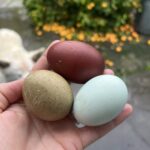
Every chicken egg comes with a natural protective layer called the bloom, laid down at the very end of the egg’s formation. On most breeds the bloom is barely visible. On our Marans, less than 10% of our adult hens grow up to produce eggs with an especially heavy bloom — and when they do, the result is a stunning egg that reads as purple, pink, or plum until you wash it. We can’t predict which chicks will become heavy-bloom layers. It’s a small lottery you opt into when you buy Marans from us, and customers tell us those eggs are the favorite ones in the basket.
French vs. American Marans — and Why Bloodline Matters
This is the conversation most hatcheries skip. There are, broadly, three kinds of birds being sold as “Marans” in the United States today:
- Production-line American Marans. Bred for volume, not color. Clean-legged (no feather on the shanks). Eggs typically rate a 3-5. Sold cheaply by large hatcheries. These are not really Marans in the European sense — they’re a generic brown layer with the name attached.
- French Black Copper Marans. The real thing. Feathered shanks, copper expression in the neck, careful breeding for egg color. Eggs rate 5-8 depending on the breeder. This is what serious Marans keepers want.
- Alchemist Line French Black Copper Marans. Our own line, refined over a decade. Eggs rate a minimum 6 at peak production. We select for color depth, temperament, and a small but meaningful copper expression in the hens — 90% of our girls have neck copper. We treat this line as our highest-investment breeding program on the farm.
If you’re paying premium Marans pricing, you should be getting feather-shanked, copper-necked, dark-egg-laying birds. If a hatchery can’t show you photos of their parent flock — or won’t tell you the egg color scores their hens hit — keep looking.
What Makes the Alchemist Line Different
We started breeding French Black Copper Marans in 2015. The first few years, like any honest breeder, we kept some birds we shouldn’t have and lost some birds we should have kept. We tinkered. We brought in fresh genetics from out-of-state breeders we trusted. We culled — meaning we removed from our breeding flock — every hen whose eggs didn’t meet our color standard. We let the boys who carried the best body type, temperament, and feather expression sire the next generation, and over time, the flock got very good.
The 2026 Alchemist Line is the product of those ten years. Specifically, what you’re getting from us:
- Egg color: At least a 6 on the Marans chart at peak production. Most hens score 7s. Occasional 8s.
- Copper expression: 90% of our females show a copper-orange flush in the neck — a sign of properly maintained Black Copper genetics.
- Body and feathering: All birds feather-shanked, with feathers running down the outside of both legs and across the outside toes — the French Marans hallmark.
- Temperament: Sweet, calm, communicative. Our hens come when called. Our roosters guard the flock with attentive but non-aggressive vigilance.
- Production: 4-5 eggs per week per hen at peak (spring and summer). The slightly lower count than commercial layers is the trade-off for the deep color — dark eggs take longer to pigment as they pass through the hen.
- Genetic diversity: Our 2026 line introduces fresh blood from out-of-state lines we hand-selected, meaning if you’ve bought our Marans before, your new chicks will be genetically distinct from older flockmates.
French Black Copper Marans Quick Stats
| Trait | What to expect |
| Egg color | Dark chocolate brown (Marans chart 6+ from Alchemist Line) |
| Bloom variation | ~10% of hens lay with a purple/pink/plum bloom |
| Egg size | Larger than standard |
| Egg texture | Shiny and smooth — visibly different from a matte brown egg |
| Eggs per week (peak) | 4-5 |
| Eggs per year (mature hen) | 180-220 |
| Time to point of lay | 22 weeks (sometimes 24) |
| Adult hen weight | 6.5-7.5 lbs |
| Cold tolerance | Very high |
| Heat tolerance | Moderate — provide shade and deep water in extreme heat |
| Free-range ability | High — roosters are attentive guards, hens respond to alarm calls |
| Disposition | Sweet, communicative, laid back, curious |
| Broodiness | Moderate — some hens will set on eggs |
| Predator awareness | Very high |
| Dual-purpose viability | Yes — slightly larger frame than pure egg breeds |
| Beginner friendly? | Yes — calm and forgiving |
| Sexable at hatch? | No — sold as straight run (50/50 male/female odds) |
Care, Climate, and the Secret to Keeping Eggs Dark
Disposition and handling
French Black Copper Marans are one of the most agreeable rare breeds we keep. The hens are calm, easy to handle, and tolerate children once they’ve grown up around them. The roosters — and we keep ours, because every male chick born here is valued — are watchful but not aggressive. Ours have never attacked a person. They guard the hens, sound the alarm for predators, and give the girls first crack at every treat. If you’ve been intimidated by rooster behavior in the past, this is the breed to reset that opinion.
Space and housing
Plan on 3-4 square feet of coop space and 10+ square feet of run space per Marans hen. They’re slightly larger than a typical layer and do not love being crowded. The feathered shanks need to stay reasonably dry — Marans don’t enjoy standing in mud or soggy bedding, and chronically wet feet can lead to foot problems. A well-drained run with deep dry bedding is ideal.
Climate
These birds handle cold weather beautifully. Their heavier frame and dense feathering make them comfortable well below freezing. Hot climates require slightly more management — provide deep shade, shallow water for foot-cooling, and resist heavy scratch grains in summer (high-carb foods make heat regulation harder).
Feed
Standard 20% protein chick crumble through 18 weeks, transitioning to a 16-17% protein layer feed. Marans don’t need anything exotic. We use Scratch and Peck Feeds and you can use our discount code Alchemist15 for 15% off. Egg color is influenced by nutrition — hens under nutritional stress produce lighter eggs — so steady access to quality feed and clean water matters.
The secret to keeping eggs dark over time
Here’s something most Marans buyers don’t realize until their second year: every individual hen lays her darkest eggs at the start of a laying cycle, and the color gradually lightens over weeks of continuous laying. After a hen takes a rest — usually triggered by a molt or by shorter winter daylight — her color resets to its deepest. So if you want consistently dark eggs:
- Let your hens molt naturally each fall. Don’t extend daylight artificially.
- Don’t push for maximum production. A hen laying 6 eggs a week will produce lighter color than a hen laying 4.
- Feed for shell quality — calcium-rich oyster shell available free-choice, plus good gut health support.
- Expect color variation across the year. Late-summer eggs will be lighter than mid-spring eggs. This is the breed working correctly, not failing.
Brooder basics for Marans chicks
Marans chicks are noticeably hardy. They feather in slowly compared to lighter breeds — give them an extra week of supplemental heat compared to what you’d offer an Olive Egger or Easter Egger. For the full first-six-weeks protocol, see our New Chicken Keepers guide. The short version: 100-105°F under the heat source for the first few days, large pine shavings (never cedar), warm 98°F drinking water on day one, and never let the chicks run out of water.
Marans vs. Welsummer vs. Olive Egger — the Brown-Egg Showdown
Three breeds we keep all lay brown(ish) eggs, but the result in your basket is wildly different. Here’s the side-by-side:
| French Black Copper Marans | Welsummer | Olive Egger | |
| Egg color | Dark chocolate (Marans chart 6+) | Terra cotta brown, often heavily speckled | Olive green (brown pigment over blue shell) |
| Eggs per week (peak) | 4-5 | 4-5 | 5-6 |
| Size | Larger than standard | Standard | Larger than standard |
| Body | Heavy, feather-shanked | Standard, clean-legged | Heavy, marans-leaning |
| Disposition | Calm, sweet, laid back | Friendly, active, talkative | Calm, sweet, laid back |
| Best for | Deepest possible egg color, premium look | Speckled novelty + good production | Green eggs from a brown-egg-style hen |
The honest answer: if you want one breed that will be the showpiece of your basket, get Marans. If you want a basket that’s a conversation — multiple shades, multiple speckle patterns — get all three. (And throw in a blue-egg layer for the contrast.) For the full green-egg breakdown, see our complete Olive Egger guide.
French Black Copper Marans Pricing and What to Expect
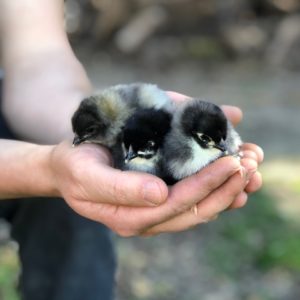
Marans are sold straight run — which means they cannot be reliably sex-identified at hatch. Each chick has a 50/50 chance of being male or female. Many keepers buy 4-6 Marans chicks at a time, knowing they’ll likely end up with 2-3 hens once the boys are identified at around 8-12 weeks of age.
- Individual unsexed Marans chick (Alchemist Line): $35
- French Blue Copper Marans (a related blue plumage variant): see breed page
- Marans fertile hatching eggs: available seasonally — see active product listing
Shipping is a flat $60 for up to 75 chicks, always overnight USPS Express. Seasonal minimums apply: 10 chicks per box March-May and October, 6 chicks per box June-September. Local pickup at our farm in Sebastopol, CA is free with no minimum. Pre-orders for the 2026 season are open now; weekly shipments begin March 24.
| Ready to add Marans to your flock?
Our 2026 Alchemist Line French Black Copper Marans are available now — and our breeding program is at the best place it’s been in a decade. See current Marans availability → |
Why Buy French Black Copper Marans from Alchemist Farm?
Marans are sold by dozens of hatcheries. Most of them don’t deserve the breed name. Here’s what makes our hatchery different:
- Ten years of selective breeding. Our 2026 line is the cumulative result of a decade of careful selection for egg color, temperament, and copper expression.
- No male chicks are killed. Every chick born here is valued — males included. At industrial hatcheries, male Marans chicks are typically culled in the first 24 hours. We don’t do that. Read more about
- our humane breeding practices.
- 100% solar-powered hatchery, plastic-free shipping. Our incubation rooms and brooders run on solar energy. Every chick box is plastic-free.
- Photo-verified breeding flock. Our parent birds and a representative sample of their eggs are documented on the breed page. You can see exactly what you’re buying into.
- Family-owned, small-batch. Franchesca and Ryan Duval and their two children operate the farm in Sebastopol. We hatch in small enough batches that every chick gets attention.
Frequently Asked Questions
How dark are Alchemist Farm Marans eggs?
Our hens lay eggs that rate at minimum a 6 on the standard Marans egg color chart at peak production. The majority of our flock lays 7s, and we occasionally see 8s. We consider a hen who lays below a 6 a candidate for removal from our breeding program.
Are French Marans different from regular Marans?
Yes. French Marans are feather-shanked — they have feathers running down the outside of their legs and across the outside toes. American or clean-legged Marans lack this trait. The French Black Copper Marans is also bred more carefully for egg color than most American production-line Marans.
Why are some of my Marans eggs purple or pink?
Some of our hens grow up to produce eggs with an especially heavy bloom — the natural protective coating laid on the outside of every egg. The heavy bloom can make the egg appear purple, pink, or plum until it’s washed. Less than 10% of our hens lay in this color, so it’s a small lottery you opt into when you order Marans chicks from us.
How many eggs do Marans lay per week?
At peak production (spring and summer), our hens lay 4-5 eggs per week. The slightly lower count than commercial layers is the trade-off for the deep egg color — dark eggs take longer to pigment as they pass through the hen.
Why are my Marans eggs lighter than they were last month?
This is normal. Every Marans hen lays her darkest eggs at the start of a laying cycle, and the color gradually lightens with continuous laying. After a hen molts and rests, her color resets to its deepest. Late-summer eggs are typically lighter than spring eggs. This is the breed behaving correctly.
Are Marans good for beginners?
Yes. They’re calm, hardy, and forgiving. The main caveat for beginners is that Marans can’t be sex-identified at hatch, so you need to budget for the possibility of getting roosters in your order. If keeping a rooster isn’t an option for your situation, plan to order extra so you end up with the number of hens you want.
Can I keep Marans with my other chickens?
Yes. Marans integrate well with mixed flocks. Their calm temperament means they’re rarely the bird stirring up trouble in a chicken yard.
Do Marans roosters crow loudly?
Less than many breeds. Our Marans roosters have a deeper, less frequent crow than smaller birds. They are still roosters, however — check your local ordinances before keeping one.
How long do Marans live?
With good care, French Black Copper Marans typically live 6-8 years, with peak laying in years 2-4.
Are Marans dual-purpose?
Yes. They’re slightly larger than pure egg breeds and have respectable meat conformation. Heritage poultry keepers often raise the cockerels for the table.
Can I hatch eggs from your Marans?
We sell fertile Marans hatching eggs seasonally. If you incubate them, the resulting chicks will carry the Alchemist Line genetics. Hatch rates depend heavily on incubation technique, freshness, and shipping conditions if mailed.
Do you ship Marans nationwide?
Yes. We ship to all 50 states, including Alaska, Hawaii, and Puerto Rico, via overnight USPS Express. Seasonal minimums apply — 10 chicks per box March-May and October, 6 chicks per box June-September — to protect chicks during travel.
| Bring Marans home this spring
Ten years of careful breeding, photographed parent flock, dark chocolate eggs you can score on the Marans chart — and chicks raised in a hatchery where every life is valued. Browse 2026 Marans availability → Or see our French Blue Copper Marans for the same egg color in a blue-feathered bird. |